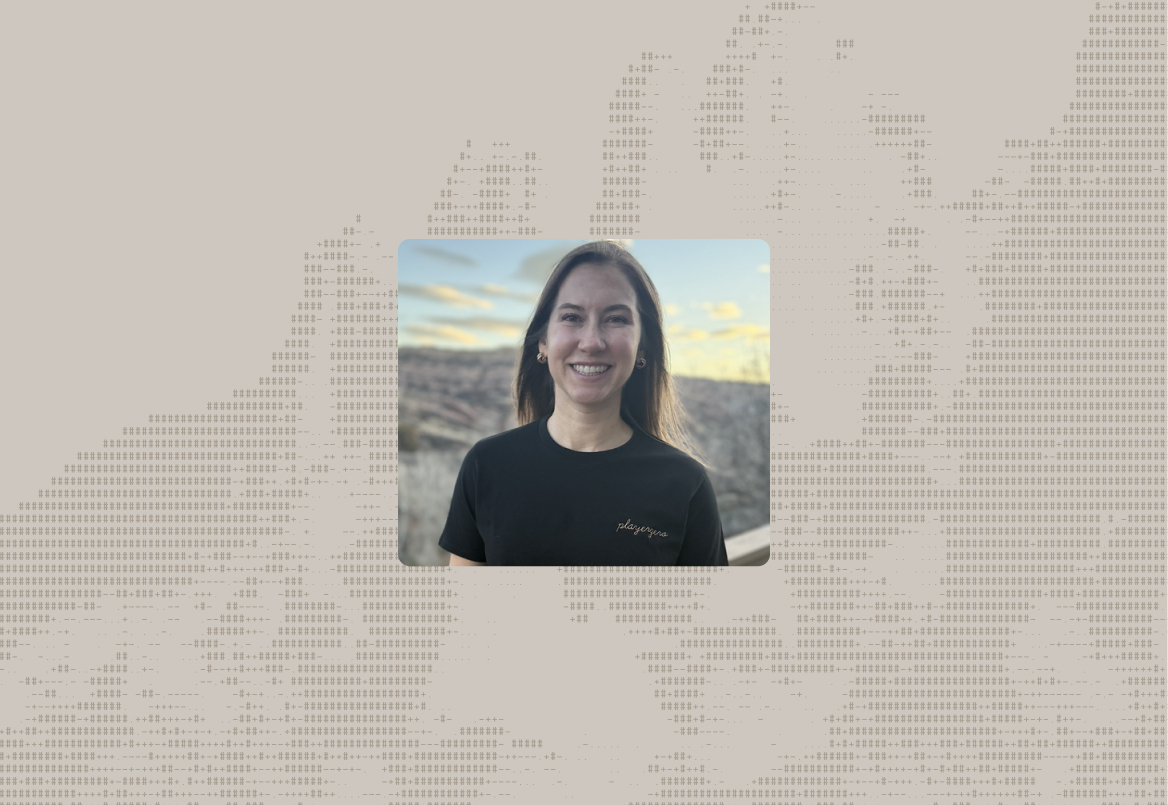
Meet the PlayerZero Team: Julia Blase, Product Director
Meet the product leader who believes modern software is just librarianship applied to new domains.
As Product Director at PlayerZero, Julia Blase spends her days figuring out what the company should build next and how to get there faster. That means talking to customers, identifying patterns in what slows teams down, and translating those insights into features that actually solve problems.
Her typical day might involve getting product feedback directly from customer conversations, sketching interface ideas, or mapping out engineering milestones.
“I think of my day as standing in front of a giant jigsaw puzzle,” she says. “You’re looking at all these pieces and asking which piece goes where, and when—do you start with the corners, the edges, or a feature in the middle?”
Increasingly, those steps are powered by AI tools like Vercel’s v0 to “vibe code” product concepts into functioning UI components, often in a single afternoon. From there, she turns to PlayerZero to scope the engineering effort, break work into milestones across frontend and backend, and refine the roadmap.
“It’s like having a senior engineer on my shoulder at all times,” Julia says.
Her path to PlayerZero began far from product roadmapping. Julia started her career as a librarian focused on digital information systems, eventually working at the Smithsonian on research data organization. Her work centered on making complex, fragmented information accessible across formats—from field notes to 3D scans to spreadsheets—regardless of medium or user expertise.
This experience shaped how she thinks about technology today. “When you’re building software, you really have to listen behind the problem someone describes to the problem they’re actually trying to solve,” Julia says. “You have to be as much an anthropologist as a technician.”
That mindset is part of what drew her to PlayerZero, where the leaders — Animesh Koratana, Maria Vinokurskaya, and Sahaana Suri — are focused on a problem that goes beyond a single AI feature.
In a crowded market full of narrow tools for note-taking, testing, or generating snippets of code, PlayerZero is rethinking how software development works across an entire organization.
Central to that vision is what the team calls an engineering world model: a way to connect how software systems, people, and workflows actually interact. Julia describes the core challenge as moving beyond context to intent—not only tracking what users do, but understanding what they're actually trying to accomplish, even when they can't articulate it themselves.
"If we can map what someone actually intended for their software to do, against what that software is doing in production, in real time, I think we'll really be onto something," she says. "Good software development happens when intent matches output and the hardest part of that is to truly understand the intent part of the equation."
One capability of PlayerZero that Julia is particularly excited about is Workflows. PlayerZero’s Workflows connect context, people, and enterprise best practices into structured tasks that mean an AI agent can follow a specified workflow of identifying a bug to testing and deploying a fix. This cross-tool, cross-team approach is drastically different from AI code generation tools that only reflect one person’s setup. Engineers get the context they need to contribute effectively, then return to their local tools without changing how the organization already operates. As one customer put it, “Claude changes the developer. PlayerZero changes the org.”
What continues to surprise her is not just how fast the tools are improving, but the depth of effort PlayerZero’s AI team puts into making them work: continuously tuning prompts, selecting models, and retesting as AI behavior shifts.
"The tools I use just keep getting better and better," she says, "so I can sketch and translate that vision into production software faster and faster."
Outside of work, Julia is a lifelong reader who read 123 books last year—spanning true crime, history, biography, mystery, and fantasy. She picks her favorites each year to gift to family members at Christmas, matching titles to the person she thinks will love them most.
Her water bottle doubles as a record of another favorite hobby: travel. It’s covered with stickers from every national park she’s visited, with Yellowstone and the north rim of the Grand Canyon among her top picks.